
Introduction to On-Page SEO
In today’s digital world, having a website is not enough. If your website is not appearing on search engines like Google, then it becomes difficult to attract visitors and customers. This is where On-Page SEO plays an important role. On-Page SEO helps improve your website pages so they can rank higher in search engine results and bring more organic traffic.
On-Page SEO refers to all the optimization techniques that are applied directly on a webpage. It includes improving content, headings, keywords, images, meta tags, URLs, and website structure. Proper On-Page SEO makes it easier for search engines to understand your content and helps users find useful information quickly.
In this article, we will discuss everything about On-Page SEO, its importance, and the best techniques to improve website rankings.
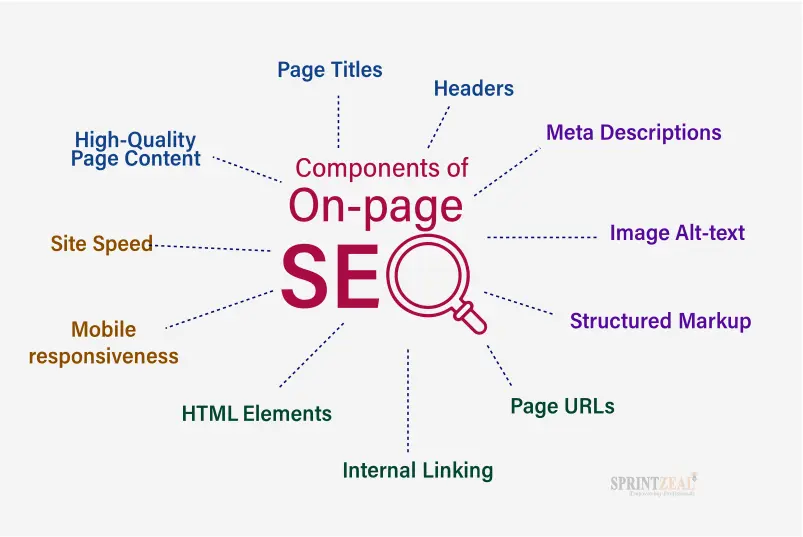
What is On-Page SEO?
On-Page SEO is the process of optimizing individual webpages to improve their visibility in search engines. It focuses on both content and HTML source code. The main purpose of On-Page SEO is to make webpages more useful, relevant, and user-friendly.
Unlike Off-Page SEO, which focuses on backlinks and external promotion, On-Page SEO is fully under your control. By optimizing your pages properly, you can increase traffic, improve user experience, and boost conversions.
Importance of On-Page SEO
On-Page SEO is one of the most important parts of digital marketing. Search engines use different ranking factors to determine which pages should appear in search results. If your pages are optimized properly, your website has a better chance of ranking higher.
Some major benefits of On-Page SEO include:
- Higher rankings in search engines
- Better user experience
- Increased website traffic
- Improved click-through rate (CTR)
- Faster website performance
- Better content readability
- Increased sales and leads
Without proper On-Page SEO, even high-quality websites may struggle to rank on search engines.
Keyword Research for On-Page SEO
Keyword research is the foundation of On-Page SEO. Keywords are the words and phrases people type into search engines when looking for information.
Before creating content, you should identify relevant keywords related to your topic. Using the right keywords helps search engines understand your content.
For example, if your topic is “On-Page SEO,” related keywords may include:
- SEO optimization
- Website SEO
- Search engine ranking
- SEO techniques
- SEO strategies
It is important to use keywords naturally throughout the content. Keyword stuffing should be avoided because it can negatively affect rankings.
Importance of High-Quality Content
Content is one of the biggest ranking factors in SEO. Search engines prefer websites that provide valuable, informative, and original content.
Your content should be:
- Easy to read
- Informative
- Well-structured
- Unique
- Relevant to the topic
High-quality content helps users stay longer on your website, which improves engagement and search rankings.
When writing SEO-friendly content:
- Use short paragraphs
- Add headings and subheadings
- Include keywords naturally
- Use bullet points where needed
- Write for humans first, then search engines
Good content builds trust and improves website authority.
Optimizing Title Tags
Title tags are very important for SEO. The title tag is the clickable headline that appears in search engine results.
A good SEO title should:
- Include the main keyword
- Be clear and attractive
- Stay under 60 characters
- Encourage users to click
Example of a good SEO title:
“On-Page SEO Guide: Improve Website Rankings Fast”
An optimized title improves click-through rates and search visibility.
Meta Descriptions and Their Role
A meta description is a short summary of a webpage that appears below the title in search results.
Although meta descriptions are not direct ranking factors, they help increase clicks.
A good meta description should:
- Include the target keyword
- Be around 150–160 characters
- Clearly explain the page content
- Encourage users to visit the page
Example:
“Learn the best On-Page SEO techniques to improve your website rankings, traffic, and search engine visibility.”
Using Proper Headings Structure
Headings help organize content and improve readability. They also help search engines understand the structure of your webpage.
The proper heading structure includes:
- H1 for the main title
- H2 for main sections
- H3 for subsections
Using headings correctly improves both SEO and user experience.
For example:
- H1: On-Page SEO
- H2: Keyword Research
- H3: Importance of Keywords
Well-structured content is easier to read and rank better in search results.
URL Optimization
SEO-friendly URLs are short, clean, and easy to understand.
A good URL should:
- Include the main keyword
- Avoid unnecessary numbers or symbols
- Be readable
Importance of Internal Linking
Internal linking means linking one page of your website to another relevant page on the same website.
Internal links help:
- Improve website navigation
- Increase user engagement
- Distribute page authority
- Help search engines crawl your site
For example, if you have a blog about SEO tools, you can internally link it to another article about keyword research.
Good internal linking improves website structure and SEO performance.
Image Optimization for SEO
Images make content more attractive and engaging, but they should also be optimized for SEO.
Image optimization includes:
- Using descriptive file names
- Adding ALT text
- Compressing image sizes
- Using high-quality images
ALT text helps search engines understand images and improves accessibility.
Example of ALT text:
“On-Page SEO optimization checklist”
Optimized images improve page speed and search visibility.
Mobile-Friendly Website
Today, most users browse websites on mobile devices. Search engines prioritize mobile-friendly websites because they provide a better user experience.
A mobile-friendly website should:
- Load properly on all devices
- Have responsive design
- Use readable fonts
- Be easy to navigate
If your website is not mobile-friendly, it may lose rankings and traffic.
Website Speed Optimization
Website speed is an important SEO ranking factor. Slow-loading websites frustrate users and increase bounce rates.
Ways to improve website speed include:
- Compressing images
- Using caching
- Reducing unnecessary code
- Choosing reliable hosting
- Minimizing redirects
Fast websites improve user satisfaction and search rankings.
User Experience and SEO
User experience (UX) is closely connected with SEO. Search engines prefer websites that are easy to use and provide value to visitors.
Good user experience includes:
- Easy navigation
- Clear design
- Fast loading speed
- Useful content
- Mobile responsiveness
If users spend more time on your website, search engines consider your content valuable.
Importance of Schema Markup
Schema markup is a type of structured data that helps search engines better understand website content.
Schema can improve search appearance by showing:
- Star ratings
- FAQs
- Product details
- Business information
Rich snippets attract more clicks and improve visibility in search results.
Avoiding Common On-Page SEO Mistakes
Many websites make SEO mistakes that hurt rankings. Common mistakes include:
- Keyword stuffing
- Duplicate content
- Missing meta tags
- Slow website speed
- Broken links
- Poor mobile optimization
Avoiding these mistakes helps maintain strong SEO performance.
Future of On-Page SEO
SEO continues to evolve as search engines become smarter. Modern SEO focuses more on user intent, content quality, and user experience.
Future On-Page SEO trends may include:
- AI-powered search optimization
- Voice search SEO
- Better mobile experiences
- User-focused content strategies
Websites that focus on quality and user satisfaction will continue to perform well in search engines.
Conclusion
On-Page SEO is one of the most powerful ways to improve website visibility and attract organic traffic. By optimizing content, keywords, headings, images, and website structure, businesses can achieve better rankings on search engines.
Good On-Page SEO not only helps search engines understand your website but also improves the overall user experience. From keyword research to mobile optimization, every element plays an important role in SEO success.
If you want long-term growth online, investing time in proper On-Page SEO is essential. A well-optimized website can increase traffic, improve brand visibility, and generate more leads and sales over time.